

How Do You Clean A Canvas Oil Painting
This post may incorporate affiliate links. Nosotros may earn a small commission from purchases made through them, at no additional cost to you.
Whether you lot have a very valuable heirloom or collector'south slice or a less valuable garage auction find, oil paintings tend to need cleaning later a while. Cleaning oil paintings without damaging them is a very hard and painstaking process. Below we have outlined how to clean old oil paintings, every bit well as why you would want to do it in the first place.
Table of Contents
- ane What Are the Possible Reasons for Cleaning an Oil Painting?
- 2 How to Preemptively Protect your Oil Painting from Becoming Dirty
- two.1 Routine Dusting
- 2.2 Protective Glazing
- 2.three Appropriate Placement
- 2.four Proper Treatment
- ii.5 Effective Direction of Accidental Damage
- 3 When Is It Wiser to Hire Professionals?
- 4 What Are Some Possible Challenges When Cleaning Oil Paintings?
- five What to Never Use to Make clean An Oil Painting
- five.one Paper Towels or Cloths
- v.2 Feather Dusters or Stiff Brushes
- v.3 Water
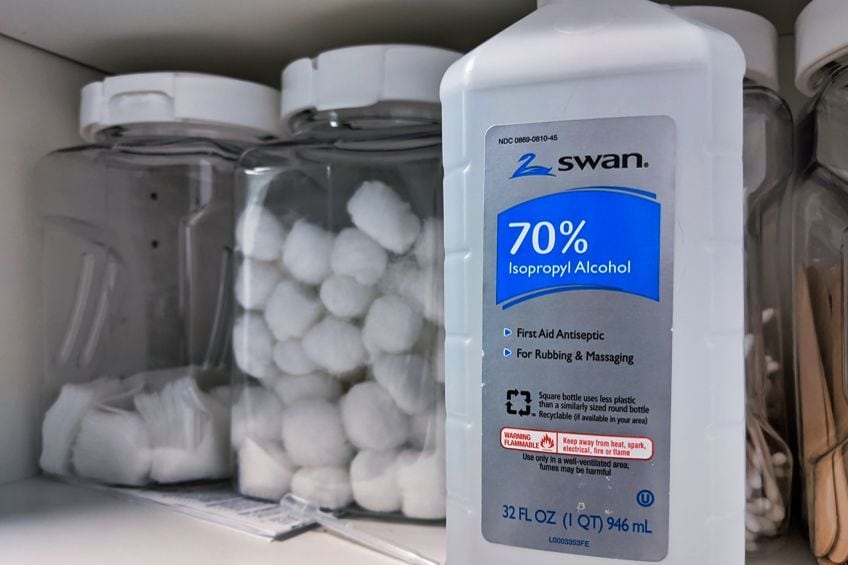
- five.4 Household Detergents, Vinegar, Lemon Juice or Rubbing Booze
- v.v Baby Oil
- 5.6 Bread or Potatoes
- 6 What Are the Unlike Methods of Cleaning Oil Paintings?
- 6.ane Cleaning Oil Paintings with Soft-Bristled Brushes
- 6.1.1 How to Clean an Oil Painting with a Soft Paintbrush: Step-by-Step
- vi.ii Saliva
- six.2.1 How to Clean an Oil Painting with Saliva: Footstep-by-Step
- 6.3 Motion-picture show Cleaners
- half dozen.iii.1 How to Clean an Oil Painting with Picture Cleaners: Stride-past-Step Tutorial
- 6.ane Cleaning Oil Paintings with Soft-Bristled Brushes
- 7 What to Do Virtually Yellowed Varnish on an Oil Painting?
- seven.1 How to Remove Varnish from an Oil Painting: Step-by-Footstep
- eight Frequently Asked Questions
- 8.1 Can You Clean the Back of Your Painting?
- viii.ii How Do I Clean a Faded Area Along the Edges of the Canvas?
- eight.3 Can I Use Lather on an Oil Painting on Canvas?
- 8.4 How Can I Make clean Oil Pigment Off of a Surface?
What Are the Possible Reasons for Cleaning an Oil Painting?
If you were not looking for advice on how to clean an oil painting then you might be wondering why you might want to. Equally time passes many airborne particles such every bit dirt, dust or nicotine volition state upon the surface of the painting. This volition build upwards over years and create a dirty layer on the surface of your oil artworks. This dirty layer is very stubborn and often requires professional oil painting cleaners to get the job done correctly.
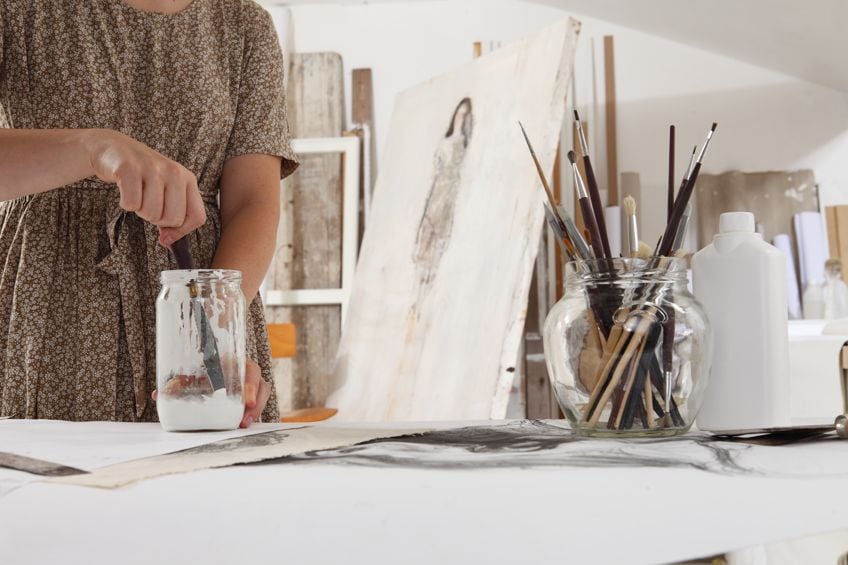
If your oil artworks are looking deadening, faded, or discolored then they are probable quite dirty and anile. As we mentioned before, this sort of piece of work is best left to professionals but there are a few means you can endeavour to clean a painting on your own and save a bit of coin. These processes can be risky and are oftentimes quite time-consuming. Then if y'all are wondering how to clean an oil painting you must make sure that yous have the patience to do it properly.
You must likewise ensure that you are willing to take on the risk of unintentionally damaging your painting in the process.
How to Preemptively Protect your Oil Painting from Becoming Dirty
Oil paintings on canvas most frequently become dingy because of how and where they are stored. There are methods to prevent the accumulation of dust and other particles on your paintings. These methods human action every bit a preemptive way of caring for your paintings and then that yous do non have to worry about hiring cleaners or trying to clean them more direct yourself at a later point in time. Light dusting, proper handling, utilise of protective glazing, and appropriate placement are the most important things to keep in mind while trying to preserve a painting and prevent the accumulation of dirt over time.
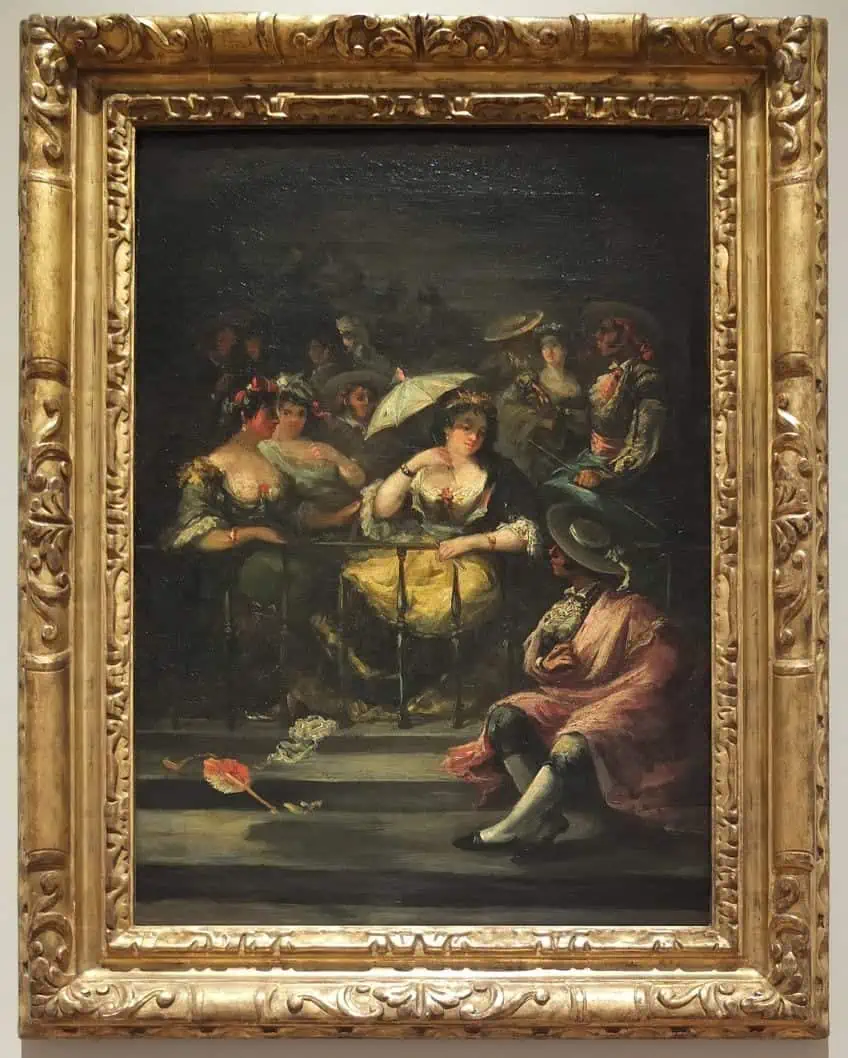 Hommes et femmes espagnoles à une tribune(1800-1900) by Eugenio Lucas Velázquez; Musée Hyacinthe-Rigaud, Public domain, via Wikimedia Commons
Routine Dusting
One of the all-time means to preclude the accumulation of grit on your painting if you lot are not using a glazing layer is to only dust your painting off regularly. First, you will wash your hands and make sure that they are properly dry. Tilt the top of the painting towards yourself and, using a fine-haired brush, begin to lightly dust the surface of your painting. Make sure that you work beyond and down the painting while ensuring that you are non flaking off bits of paint as you lot work. Pay attention to the finish of your painting and make certain that you are non altering this with any abrasive movements. For instance, if your painting has a matte finish make sure that your dusting is non resulting in any shiny patches actualization on the surface of the artwork.
If y'all find that y'all are removing paint every bit you dust, cease immediately and look into properly sealing the painting with a varnish or adding a protective glazing layer.
Protective Glazing
Ideally, you could take a glazing layer, made of glass or acrylic, within the framing of your oil artworks. When calculation this layer exit a infinite of at least 0.5cm between the glazing and the highest betoken of the artwork. You can do this past placing a spacer bar or an inner frame liner between the surface of the painting and the frame itself. There are specialized drinking glass and acrylic glazings available that reduce glare and have anti-static properties.
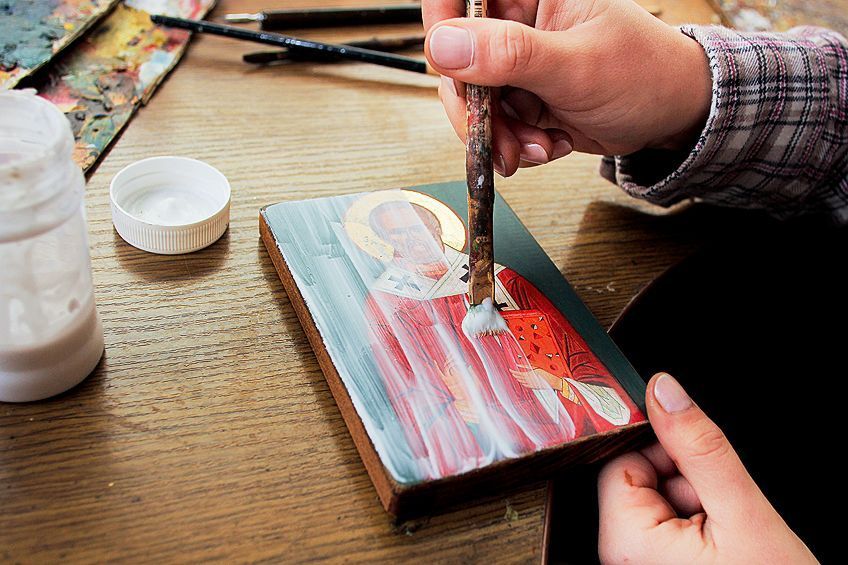
The glazing will protect the artwork from clay, grit, nicotine, and other forms of damage. To clean the glazing yous tin can use a dry or clammy cloth and gently wipe down the surface, depending on the type of dirt that has accumulated. If using a dampened fabric be sure not to bear on the frame or allow liquid to run under the frame, beneath the glazing, and onto the surface of the artwork.
Appropriate Placement
Placing your painting away from straight sunlight or sources of wet is very important. For example, avoid placing your painting beyond from a window that receives direct sunlight or virtually a kitchen or bath. If you smoke indoors it is ideal for the painting to exist kept in a room where smoking is minimal. Information technology is likewise important to go along the painting away from whatever areas where there is a lot of open up and moving air, such as virtually an open up window. These areas will accept the highest concentrations of grit and dirt. Keeping a painting away from a kitchen or dining room is likewise preferable as the steam and grease in these areas can damage paintings. Oil artworks with a protecting glazing layer practice not need to exist kept away from these areas as much as exposed oil paintings on canvass would.
This ways that the most effective fashion of protecting your paintings is with proper protective glazing.
Proper Handling
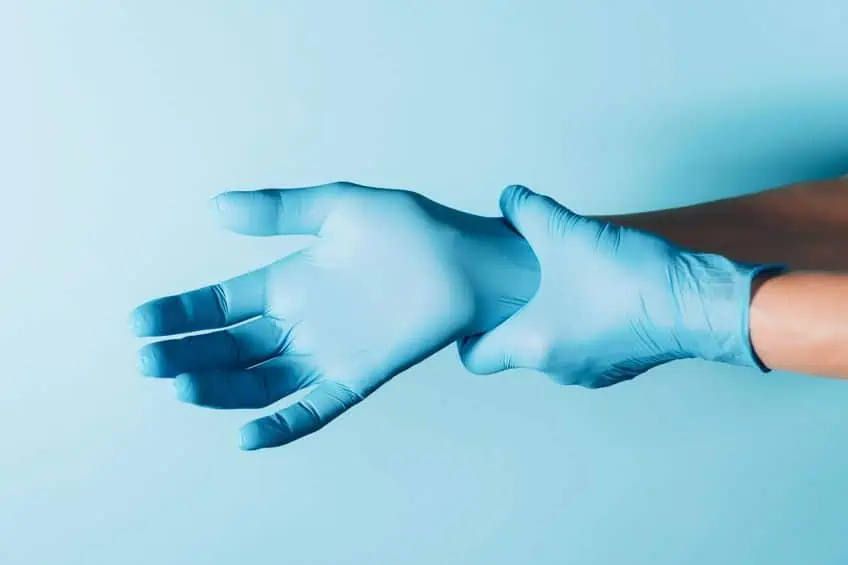
If yous handle your painting and it does not have protective glazing, make sure that you are wearing gloves. The dirt, oils, and secretions from your hands can impairment the unprotected paint and get out markings on your painting. These may not exist immediately visible and will only bear witness up at a later stage. Ideally, you should wear surgical gloves whenever handling your painting and do your best to ensure that children or guests practise non touch the painting.
Effective Management of Adventitious Damage
If a liquid is spilled or splashed against the surface, prevarication it down confront-upwards to avoid having it run down the painting. Do not endeavor to rub the liquid off the surface. Use the corner of a paper towel or a thin cloth to gently wick up the liquid.
Contact professional cleaners to assess the damage and give you a consultation regarding a cleaning.
When Is It Wiser to Rent Professionals?
An oil painting will go dirty over time if it has been stored incorrectly or has been kept on display over fourth dimension. Nonetheless, if your painting is damaged too every bit muddied so information technology is a good idea to take information technology to professional person oil painting cleaners rather than to attempt cleaning it yourself. If your painting has any warping, cracking, or flaking then it is considered damaged. Whatever effort to clean a damaged painting, regardless of how careful or gentle, could effect in extreme damage to the piece.
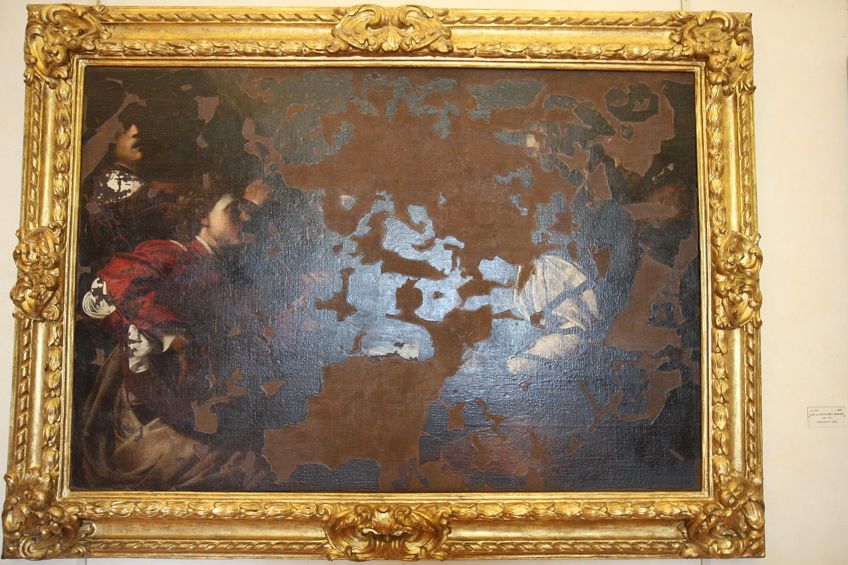 The Carte du jour Players(1800-1899) by Bartolomeo Manfredi; Uffizi, CC BY three.0, via Wikimedia Commons
If you lot would like to take an old and valuable painting repaired, restored, and cleaned then you volition need to discover an fine art conservator. Even so, if you simply want to take your painting cleaned you can look for companies online that offer services in your area. Professional oil painting cleaners can be found fairly easily but it would be platonic for you to make sure that you find a company or private that has a good reputation working with oil paintings on sail.
If you lot decide to make clean your painting on your ain, you must accept the hazard that y'all may crusade damage to your painting. It is best to perform a spot exam beforehand, to see how your cleaning method interacts with the painting. If you see that you lot are removing any paint or causing impairment and then you should immediately stop. Rather cull another method of cleaning or refer the painting to a professional as in that location is a skilful chance yous could ruin the painting if you keep with the same technique.
We have outlined some methods below that you can try to use to clean your oil paintings on canvas. If none of those methods work yous may need to have the painting cleaned by professionals who are trained to use stronger chemicals on artworks or have the quondam varnish removed. Make sure that you have had valuable paintings insured before entrusting them to professional person cleaners.
It is always better to exist prophylactic than sorry!
What Are Some Possible Challenges When Cleaning Oil Paintings?
Improper cleaning techniques can irreversibly damage paintings. Even if paintings have not necessarily been damaged to the point of peeling or corking, information technology is all the same very likely that virtually DIY methods volition have unintended consequences on the painting. Often this means paint removal or color fading due to too much abrasion or heavy employ of cleaning agents. Information technology can as well hateful warping or stretching on the sheet due to lack of back up and excessive force per unit area during the cleaning process.
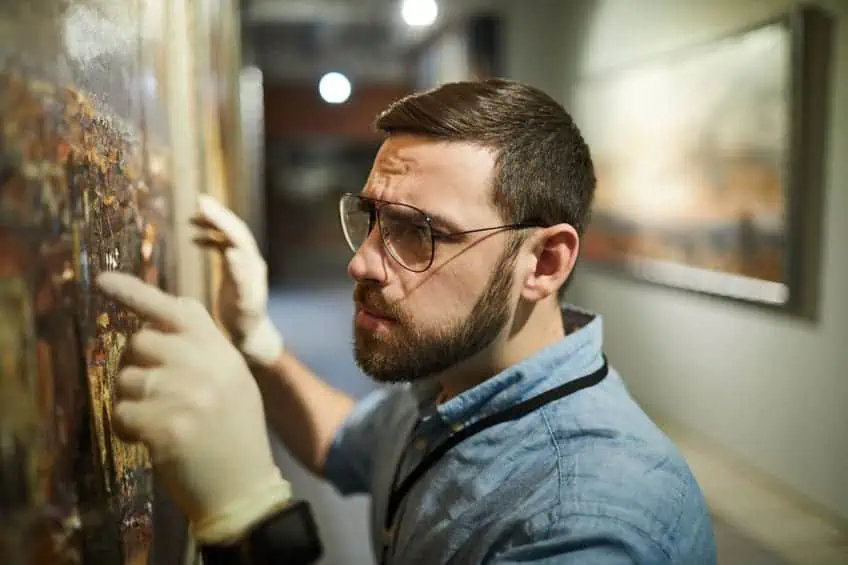
Once some of the dirt has been cleaned away, you volition often run into a layer of varnish on the oil painting. Varnishes yellow over time and lead to a washed out and dull look on your paintings. If yous desire to fully restore your painting the old varnish volition need to be removed and a fresh glaze reapplied. Removal of old, yellowed varnish is meticulous and delicate work. It is very difficult to dissever varnish from the paint. You lot often will need specialized products to exercise this finer.
If the surface of the pigment is no longer properly preserved it can make the cleaning process more complicated. A desperately preserved surface could hateful that cracks, fissures, and gaps may appear one time you begin the cleaning procedure. It is always a good thought to perform a spot examination somewhere along the edge of the painting earlier continuing elsewhere on the surface of the painting.
This allows you to meet how the painting is going to react to your called cleaning method.
What to Never Use to Clean An Oil Painting
If y'all read many blogs that tell you how to clean an oil painting you volition encounter some dubious claims near what you can do at dwelling to revive an onetime oil artwork. Nosotros are here to tell you that these techniques come with some very serious risks that you should consider earlier jumping right in for a fun DIY cleaning.
Many of the at-habitation methods suggested tin can cause serious damage to your paintings and are not the amazing timesaving hacks they seem to be. If y'all are cleaning your oil painting at dwelling instead of using professional services you should consider investing the extra time and money needed to try to practice it properly. If a method sounds besides adept to exist true it is commonly hiding some downsides. Beneath we have outlined a few of the virtually common cleaning misconceptions that you lot may encounter while wondering how to clean quondam oil paintings at home.
Paper Towels or Cloths
Using paper towels to make clean an oil painting is non a very adept idea because the pieces can rip off any texture the painting has. These little pieces may damage the painting as they snag, or brand the painting appear even dustier or dirtier than earlier you tried to clean information technology. They could even tear the painting itself. Cloths also have a chance of catching on to your painting and pulling away some of the paint. If you really desire to use a cloth of sorts, brand sure it is a dry, anti-static microfiber textile.
Wipe your microfiber textile very lightly over the surface of the painting, being conscientious not to apply pressure on your oil artworks.
Plume Dusters or Stiff Brushes
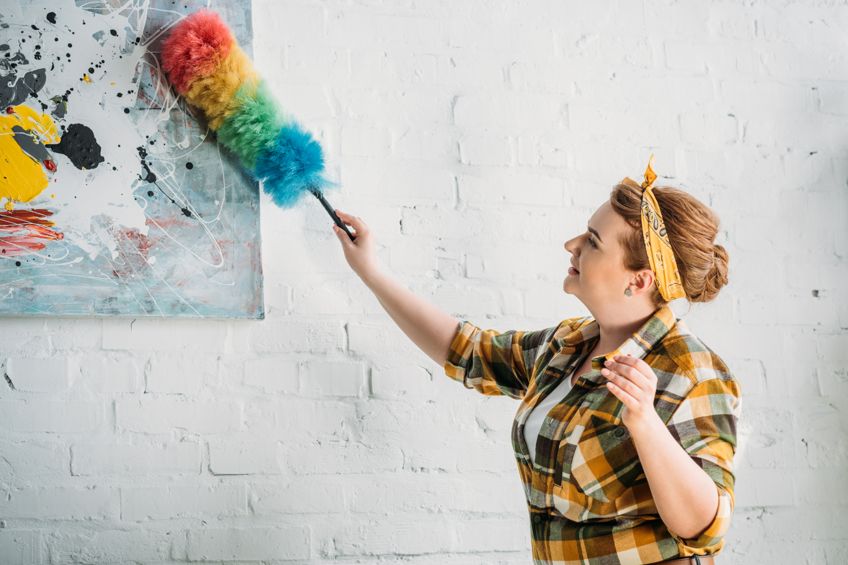
Y'all may think that a feather squeegee is perfect for lightly dusting your paintings, simply feathers actually take sharp barbs that can scratch your painting. This scratching can happen regardless of how careful or gentle you endeavour to be. Information technology would besides be unwise to try to use any stiff brushes on your painting for the same reasons. Potent brushes tin damage and scratch your oil artworks. If you want to use a brush to dust your painting y'all can employ a fine, natural-haired paintbrush to lightly make clean the surface of your painting. We outline how to make clean an oil painting with a fine-haired paintbrush above.
Water
You should never consider using water or whatever water-based solutions to paintings. Using h2o in any form on oil artworks can have very detrimental furnishings. Some of these effects will be immediate while some may only be visible later on. For example, h2o can weaken the bail between the medium and pigment of your paint which causes loss of pigment. H2o tin weaken the paint'due south attachment to the canvas. This tin cause flaking and peeling of the pigment either immediately or over fourth dimension. If water makes information technology to the canvas in the right amounts it tin shrink and crusade separation of the pigment from the canvas.
This separation can cause permanent distortion of your oil artwork.
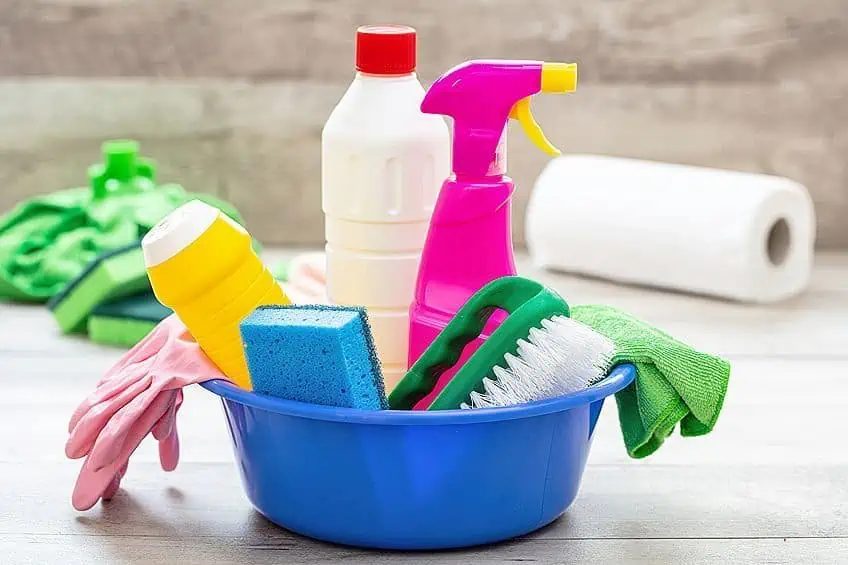
Household Detergents, Vinegar, Lemon Juice or Rubbing Booze
Any sort of household detergent can damage your painting past removing the paint. This applies to other substances such every bit vinegar, lemon juice, and rubbing alcohol that have been spouted as DIY hacks for cleaning oil paintings. Substances this acidic can smudge the pigment on your canvas as yous try to clean it, or even remove the paint entirely.
Infant Oil
Another myth of DIY paint cleaning is that yous can use baby oil with no consequences. The idea is that baby oil tin be applied to the surface of a painting to clean the artwork and make the colors appear brighter and more vibrant. In authenticity, the babe oil will add a sticky layer to the surface of your painting that will only attract even more clay as fourth dimension goes on. Using this method will appear to piece of work well initially but leave you with an fifty-fifty dirtier painting in the long run.
Leaving baby oil on a painting to get together dirt will issue in a thick, tough layer of crud that will be much harder to make clean.
Bread or Potatoes
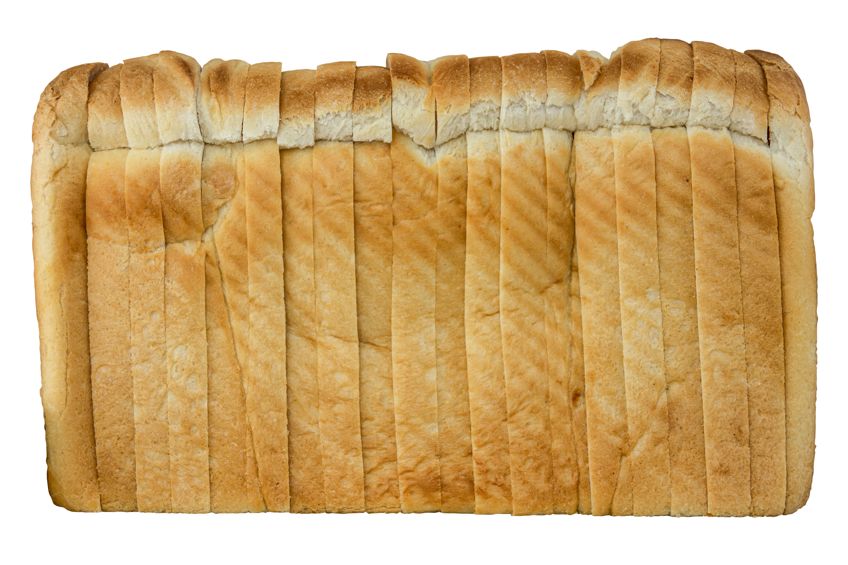
Using bread or potatoes to clean dirty paintings is a very popular DIY method that you might come across all over the cyberspace. These methods are a very bad idea since they can attract unwanted mold growth or leave dust alluring residue on the surface of the painting. Bread can leave crumbs on your paintings or deposit wet into the paint. The crumbs tin attract mold while the wet can distort the colors and texture of your painting. The process of dabbing the bread onto the sheet can as well cause damage to the painting as the pressure can stretch the canvas. Potatoes will eolith a starchy residue on your painting that will attract airborne particles and mold growth with fourth dimension.
What Are the Unlike Methods of Cleaning Oil Paintings?
At present that you lot have an idea of the challenges that you lot may run into while trying to clean an oil painting equally well equally what methods you should avoid trying, we can continue to detail three tried and tested ways to become your paintings looking clean and revitalized.
Cleaning Oil Paintings with Soft-Bristled Brushes
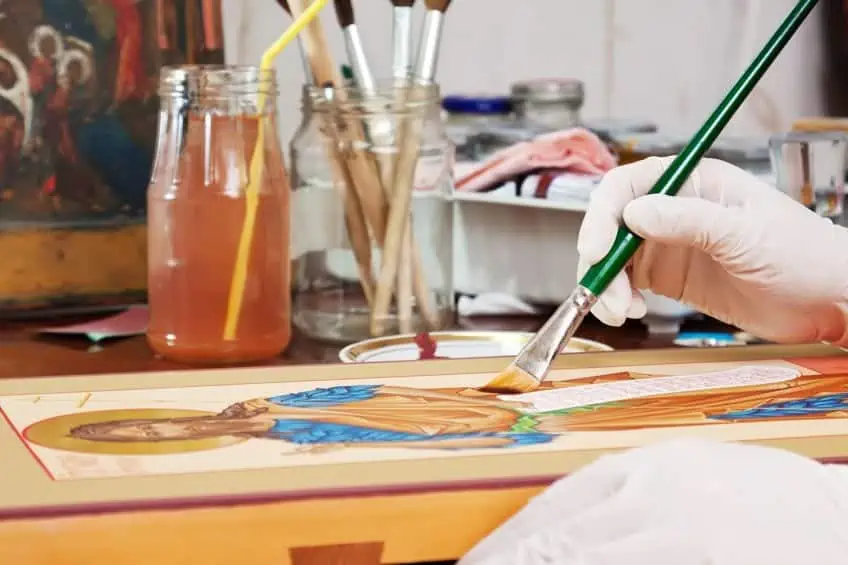
Soft-bristled brushes are a adept way to make clean your paintings if they have a thin, loose layer of grime built upon the surface. Every bit nosotros mentioned above, cleaning your paintings regularly in this style can help to prevent the need for other, more intense cleaning procedures at a later stage. You will need the following tools:
- A soft-bristled ii-inch paintbrush
- Kraft paper or a tarp
- A well-lit working expanse
How to Clean an Oil Painting with a Soft Paintbrush: Step-by-Step
Take your painting and place it in your working surface area. Inspect the painting and make certain that at that place is no slap-up, chipping, flaking, or peeling earlier you lot start brushing off loose residue. Place down your Kraft paper or tarp and agree your painting upright on summit of this area while yous work. The paper or tarp is there to brand cleanup a bit easier but also to help y'all notice if you are removing whatever paint while you work. If you notice little specks of paint landing on the tarp, you should finish immediately and rather take your artwork to a professional.
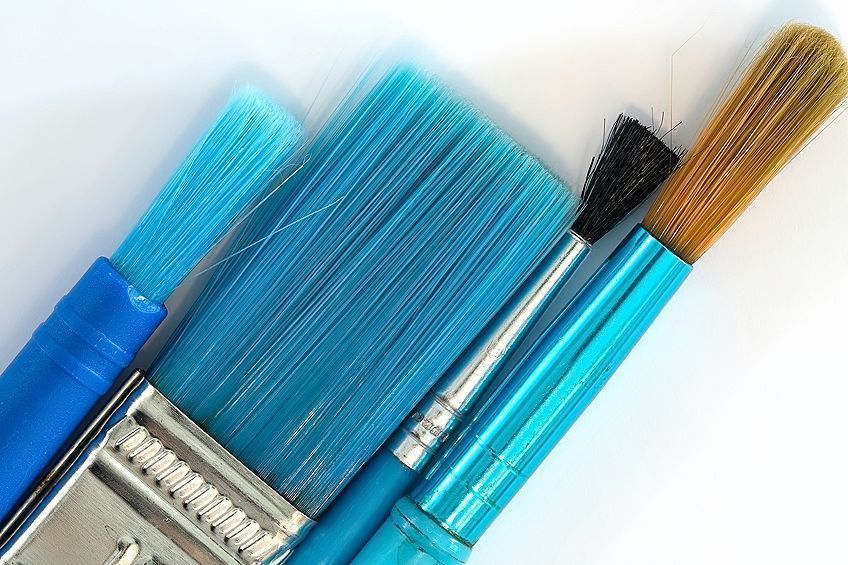
While holding your painting upright, tilt the top of the painting towards yourself. Angle the painting at nearly 70-five degrees to the surface. This is then that equally you are working your style downwards and dusting, the dirt will easily country on the work surface and lower downward on the painting. Begin lightly brushing the surface of the painting. Make certain that you are using the paintbrush in a down and outwards motility. Start at the top and move beyond in rows to cover the whole painting. Be sure to accept your fourth dimension and do not rush.
Ensure that yous are keeping an middle out to see if you are removing any pigment or texture as you work. If you see whatever flakes of paint coming off or notice that a previously matte surface is becoming smoother, you should stop immediately and accept the slice to a professional cleaner instead. In one case the painting is fully dusted y'all can hang it back up on display.
Mayhap reconsider where information technology is placed or whether you would want to add together a protective glazing layer as nosotros mentioned in a higher place.
Saliva
This method may sound a petty bit gross or confusing, just hear united states out. Saliva has enzymes such as amylase and lipase that help intermission down tougher layers of crud without penetrating into the pigment or sail below. The slightly acidic pH value of saliva and its slightly warm temperature makes information technology effective at removing dirt and grime that has compacted and accumulated on your paintings. Saliva is as well bachelor in abundance if you have the patience, which makes it quite affordable too. You volition need these items:
- Cotton Swabs
- A well-lit working space
- A folded shirt or towel
How to Make clean an Oil Painting with Saliva: Step-by-Step
Lay your painting on a flat surface with a folded shirt or towel underneath it. You are laying it down because this will let you to clearly see what you are doing every bit you clean. Information technology is too important considering it prevents the running or dripping of liquids downward the confront of your painting. Placing a folded towel or shirt beneath the painting helps to stop the canvass stretching as you apply slight pressure once you begin cleaning. Brand sure that you have non folded the shirt or towel too thickly and that it is not placing outwards pressure on the artwork. Rather have the towel or shirt sitting slightly below the underside of the painting than have information technology pushing outwards. Accept a photograph of your painting before you get started (optional). This is so that you can compare what it looks like before and after cleaning.

Wet a cotton bud on the inside of your mouth and start cleaning in an camouflaged office of the painting. Recall of this small area every bit a spot test so that if something goes wrong information technology won't be likewise obvious. Clean the painting by firmly but gently rolling the wet cotton bud along. Keep an eye on the cotton bud and one time it has been covered in crud you repeat the process with a fresh one. Make sure that you lot are non rushing or scrubbing. The rolling motility is very important.
Make certain that you are just removing grime and not removing paint. Endeavor focusing on certain features of the painting at a time. For example, do the sky and trees of a landscape separately. This is because different pigments tin respond differently to cleaning. It also ways that if any paint does lift information technology will non be transferred elsewhere on the painting. One time the painting has been fully cleaned yous tin put information technology back on display.
If y'all do not manage to clean the entire painting in one sitting you tin can embrace it and identify it upright somewhere condom and out of the mode until yous can keep the process.
Picture Cleaners
If your painting has really tough layers of congenital-up grime on its surface and neither of the above methods has helped remove information technology in whatsoever fashion so you will need stronger, specialized art cleaning products. Nosotros suggest using either the Winsor & Newton Artists' Picture Cleaner or the Grumbacher Oil Painting Restorer. Both these products are suitable for cleaning oil paintings and should even aid to lighten up yellowed varnish. This may save y'all the try of having to get the varnish removed or trying to remove it yourself if the cleaning does not restore your painting adequately. This is what y'all will demand:
- Your motion picture cleaner of option
- A folded towel or shirt
- A glass bowl
- Cotton swabs
- Distilled turpentine
- Surgical gloves
- Cotton fiber pads
- A well-lit and properly ventilated expanse
How to Clean an Oil Painting with Picture Cleaners: Step-by-Footstep Tutorial
Lay your painting on a apartment surface with a folded shirt or towel underneath information technology. You are laying it down considering this will allow you to clearly see what you are doing every bit y'all clean. It is besides important because it prevents the running or dripping of liquids downwardly the face of your painting. Placing a folded towel or shirt beneath the painting helps to stop the canvas stretching as you utilise slight pressure in one case y'all begin cleaning. Brand certain that you take not folded the shirt or towel too thickly and that information technology is not placing outwards pressure on the artwork. Rather take the towel or shirt sitting slightly below the underside of the painting than have information technology pushing outwards.
Put on your surgical gloves to protect your hands. Shake your canteen of picture cleaner gently and well earlier opening. Pour some of the picture cleaner into a glass bowl. Consider taking a photo of your artwork before you begin, it tin can be helpful to have a "before" photograph to reference later on. This fashion y'all tin can make certain you are not wasting your time trying to make clean a painting that needs a varnish removal or more intense, professional person cleaning.

Cull an inconspicuous area of the painting to perform a spot test. Dip your swab into the cleaner and brainstorm to gently but firmly scroll it forth the expanse. Take note to see if there is any difference. Ensure that you are but removing grime and not paint. If y'all discover that paint is coming off, stop immediately and refer the painting to a professional person. Recollect that the cleaner may need some time to start working or may take a few repetitions over the surface earlier you notice a deviation. Refer to the instructions on the bottle if you are unsure. Apply a cotton pad dampened with distilled turpentine to gently get over the cleaned area. One time again sentry to make sure there is no removal of paint or smudging of paint.
Make sure that as a cotton pad becomes muddied you start using a fresh one. You lot practice non want to exist moving clay around on your canvas. Repeat this process over the rest of your artwork, doing small sections at a time. Use a fresh cotton wool bud for every new section or whenever the bud becomes congenital upwards with grime. Effort to do certain features of the painting altogether. For example, focus on the trees of a landscape before moving onto the sky or mountains. This is considering areas with unlike textures or pigments may respond differently to cleaning. Take your time and practice not rush. If y'all find that you lot cannot clean the whole painting in one sitting and so encompass it and place it upright out of the style until you tin continue. Take a photo of your progress so that yous do not accidentally clean the aforementioned area a second time.
One time your painting has been fully cleaned you tin accept a final photo for comparison and so hang it up dorsum on brandish. If y'all are not pleased with the results you may need to consider removing the yellowed varnish or having the painting cleaned by professionals.
What to Practise About Yellowed Varnish on an Oil Painting?
Sometimes but cleaning the surface of a painting is not enough to restore its colors. Often this is because the varnish has yellowed and is the true culprit of loss of vibrancy in oil paintings. Varnish is applied to paintings to protect the paint from clay and other hazards. It is likewise used to really increase the vibrancy of paint after initial application or to give it a overnice finish such as matte or gloss. Over time though, the varnish may darken every bit it ages and it will begin to make the painting look faded and dull.
Varnish layers can be removed using solvents but this process can be especially risky. Solvents can quickly penetrate through paint layers and cause irreparable damage to paintings and canvases. Paint layers can exist completely dissolved by solvents that are too harsh. If handled incorrectly or in the wrong environs solvents tin can be extremely dangerous too. They are a fire gamble and tin have adverse health effects if used improperly.
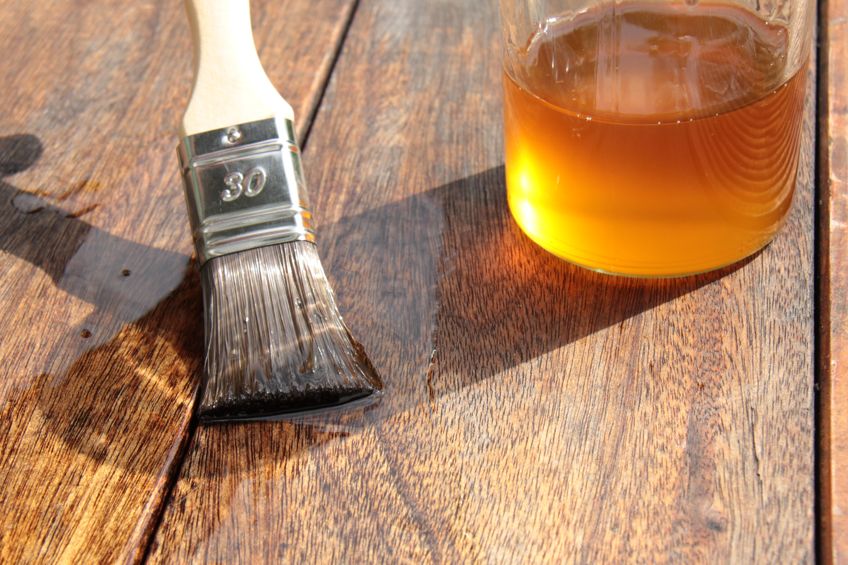
It can be tricky to figure out what solvent is safe to use on your painting if you want to do information technology yourself. It helps to know what kind of varnish has been used on your painting in the first place. If information technology is a painting made by you lot or a friend and so you are in luck and can easily find out what solvent tin can best remove it by looking online. If y'all have a valuable heirloom or something with an unknown origin it will be more hard. Try taking information technology for an appraisal and come across if the varnish can exist identified or consider having the varnish removed by professionals.
If you have no idea what varnish has been used, do not want to try to detect out, and cannot get it professionally cleaned then y'all may effort to remove the varnish yourself. If you endeavor to do this you must accept that information technology may non work or information technology may crusade damage to your painting. Nosotros suggest using a balmy, artist's solvent such equally this Winsor & Newton Distilled Turpentine. If this does not work for you, you may consider getting a few different solvents that are intended for different varnish types. Try using each of them on different camouflaged areas of your canvas to meet which works best.
When using a solvent to remove a varnish layer we strongly recommend getting a neutralizer to mitigate the effects of the solvent once it has cut through the varnish.
You do not want the solvent existence absorbed into the paint itself or into the sheet below. If a solvent penetrates in this fashion it volition touch on the integrity of your oil painting. We suggest trying to order a bottle of Gainsborough Neutralizer. It may be institute in sure art stores or ordered from the Gainsborough website linked here, but information technology is not available on Amazon at the fourth dimension of writing this article. You volition need the following items:
- A well-lit, properly ventilated piece of work expanse
- A folded shirt or towel
- Surgical gloves
- A glass (or non-reactive) bowl
- Your chosen solvent
- Cotton buds
- Cotton pads
- A neutralizer
How to Remove Varnish from an Oil Painting: Pace-by-Step
Lay the painting downwardly and use the folded shirt or towel to support the underside of the sheet. Make sure that this support does non cause the painting to burl outwards. The thought is to prevent any unnecessary pressure on the sheet that could crusade stretching and distortion. It is important to lay the painting down in this way equally it prevents the running or dripping of liquids downward the face up of your artwork. Put on your surgical gloves and apply some of the solvents to a cotton fiber pad. Be careful to not soak the pad completely. Too much solvent can damage your painting.
Perform a spot test in an inconspicuous area of your painting. Do this past gently moving the pad across an surface area and so lifting it to cheque for damage. You could too lightly dab the area in spots. If everything is in order, you can repeat this process until the varnish has completely lifted. Use a fresh cotton pad when necessary.
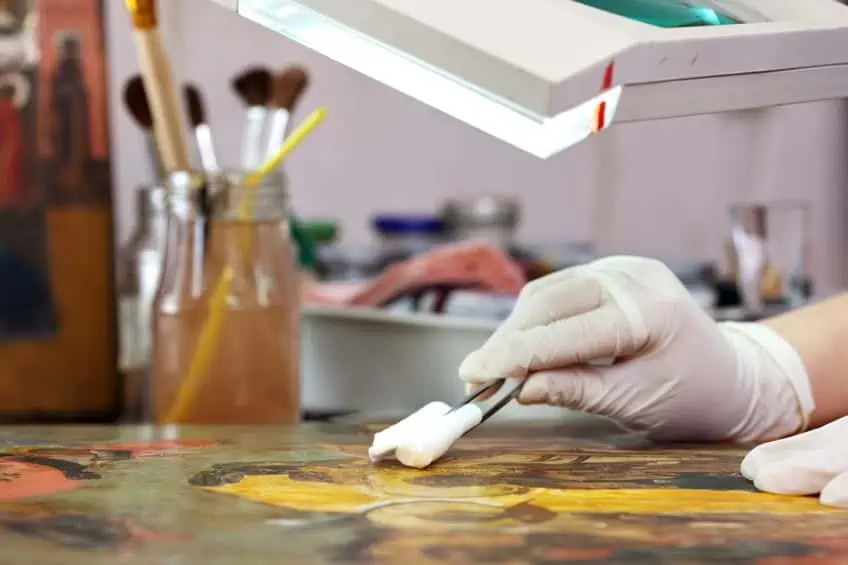
If your painting is textured you can use a cotton fiber swab to apply the solvent to those areas. Using a cotton wool pad on very textured areas could outcome in too much solvent being deposited on the artwork and causing damage. Make certain to apply a neutralizer to these areas in the same way. In one case the surface of the paint has had the varnish removed you can either apply a thin coat of oil painting medium or apply a new layer of varnish. Y'all could even do both for maximum protection. Make sure to properly dispose of your cotton fiber buds and swabs when you are finished removing the varnish off of your oil painting. Rehang your painting up on display and enjoy your newly restored slice.
There are many ways that people try to make clean their dearest paintings but many tin damage the painting beyond repair. If the painting has monetary or sentimental value it is worth the money to rent a professional person to do the cleaning on your behalf. If you experience that you would like to give it a endeavor yourself nosotros take outlined how to clean old oil paintings at home.
Frequently Asked Questions
Tin You Clean the Back of Your Painting?
Aye, you lot tin clean the dorsum of your painting past lightly dusting it down with a soft-bristled two-inch paintbrush. Make sure you don't apply enough pressure to push the canvas outwards. Do not endeavor to clean the back of the painting with anything that could impart moisture into the canvas. This means no detergents, sprays, cleaners, and absolutely no water.
How Practice I Clean a Faded Area Along the Edges of the Canvas?
If you have a faded area along the edges of a painting it may actually be from the frame. That may be the original color of the painting and it is the inside of the painting that has darkened from historic period and grime. If you do not have a frame on your painting and are referring to the sides of the sheet itself, y'all tin can clean this area the same manner as you would make clean the whole painting.
Can I Use Soap on an Oil Painting on Canvas?
While some soaps may not be dissentious to your oil painting information technology is the risk of imparting water on the canvas that poses adventure to the integrity of the work. We advise merely cleaning your painting in the ways we accept specified. Notwithstanding, some artists have suggested using an olive oil-based soap and had positive outcomes. Employ this method later doing further research and at your own risk.
How Can I Make clean Oil Paint Off of a Surface?
If spilled oil pigment is notwithstanding wet y'all can wipe it up so clean the expanse with a mild detergent. If the paint is dry you lot could try scratching it off or using mild turpentine. The way you choose to deal with the dried pigment will depend on the surface it is on. Yous should be conscientious using either of these methods on wooden furniture or upholstery, but it is fine for tiles or plastic. Paint on precious woods and fabric of whatsoever sort may require more than delicate methods or professional cleaning. The best idea is to try to prevent spills by placing down Kraft newspaper, erstwhile newspapers, or a tarp before you lot begin working.

How Do You Clean A Canvas Oil Painting,
Source: https://acrylgiessen.com/en/how-to-clean-an-oil-painting/
Posted by: boylesmaland.blogspot.com
0 Response to "How Do You Clean A Canvas Oil Painting"
Post a Comment